BUSINESS AREAS / INVENTORY & WAREHOUSES
Follow stock through the business.
Connect quantities and locations with purchasing, sales and the records behind each movement.
How the work connects
- 01
Define items and locations
Review item codes, units of measure and warehouse structure before moving stock.
- 02
Record the movement
Trace receipts, transfers and issues through the relevant stock documents.
- 03
Review stock and value
Reconcile quantities with the Stock Ledger and Stock Balance; review valuation settings and period cut-offs.
INSIDE THE CURRENT TA APPLICATION
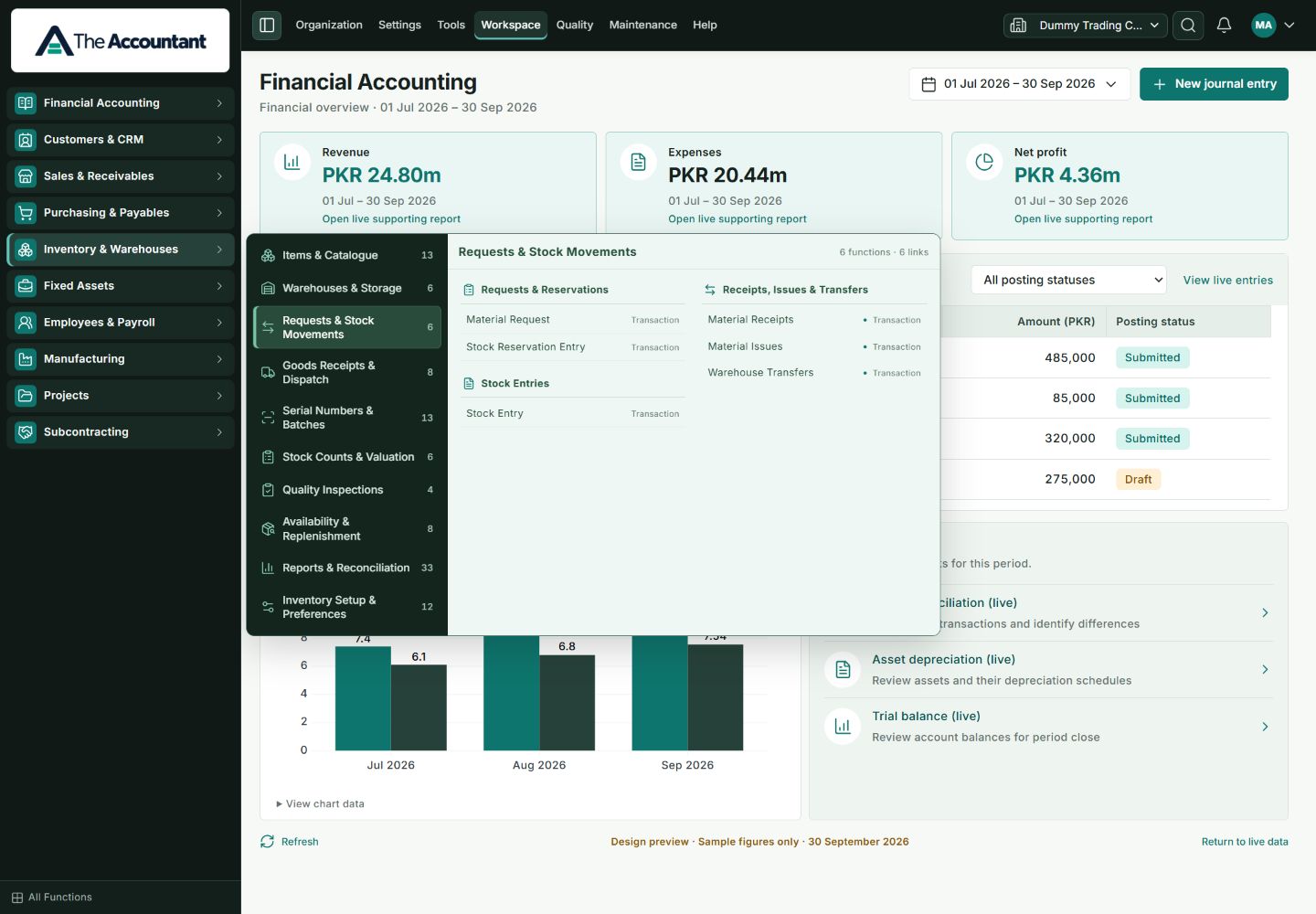
Requests & Stock Movements
EXPLORE IN YOUR DEMONSTRATION
Records with a purpose.
- Item and Warehouse
- Stock Entry and Stock Reconciliation
- Purchase Receipt and Delivery Note
- Stock Ledger and Stock Balance
Availability depends on roles, installed modules and configuration. Demonstrate your required exceptions as well as the routine case.
A PRACTICAL BUSINESS SCENARIO
What this means in practice.
A warehouse starts with 128 units, receives 24 and issues 18: 134 units remain. Quantity reconciliation and valuation reconciliation are related but separate checks.
Illustrative explanation; not a live transaction or customer case study.Make the demo about your work.
Bring your warehouses, item units, opening quantities and any batch, serial or valuation requirements for fit assessment.
Discuss inventory & warehousesRELATED WORKFLOWS
Continue the story.
Purchases & Payables
Connect supplier requirements, receipts, bills and payments so the payable can be explained.
Sales & Receivables
Follow the customer journey from an agreed sale to invoice, receipt and outstanding balance.
Manufacturing
Explore how materials, bills of materials and production records connect with inventory.